
Personalization and AI: The Game-Changers of 2025 Marketing
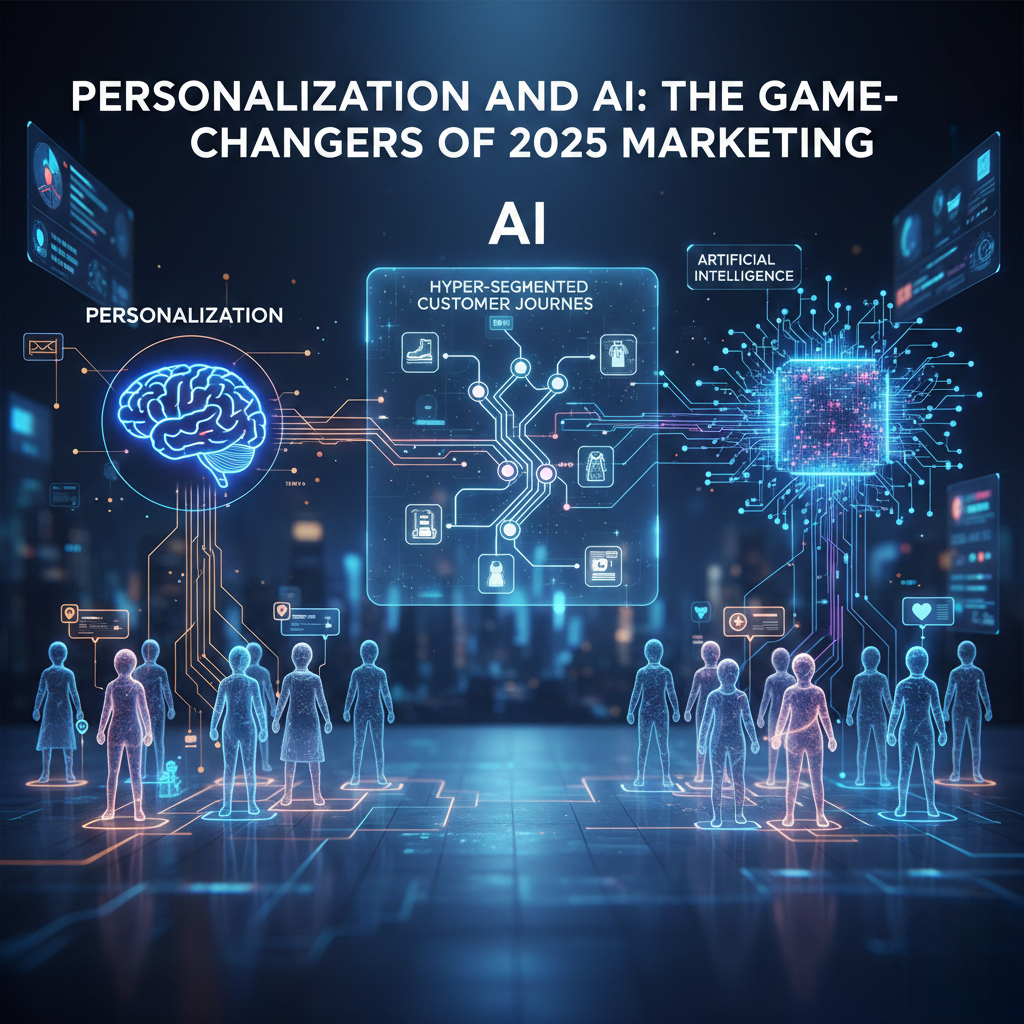
The marketing landscape is in a constant state of evolution, but some shifts are more revolutionary than others. As we look towards 2025, two forces stand out as absolute game-changers: personalization and artificial intelligence (AI). These aren’t just buzzwords; they are the intertwined pillars upon which the future of effective marketing will be built.
For years, marketers have dreamed of truly understanding each customer, speaking to their individual needs, and delivering experiences that resonate deeply. Mass marketing, with its broad strokes and generic messages, is becoming increasingly obsolete in a world where consumers expect tailored interactions. Enter personalization – the art and science of delivering customized content, product recommendations, and experiences to individual users based on their data.
But how do marketers achieve this level of hyper-personalization at scale? This is where AI steps in.
The Power Couple: AI and Personalization
AI is not just a tool; it’s an enabler. It provides the computational muscle and analytical prowess needed to unlock the full potential of personalization. Here’s how this dynamic duo is set to transform marketing by 2025:
1. Hyper-Segmented Customer Journeys
Forget broad demographic segments. AI algorithms can analyze vast datasets—purchase history, browsing behavior, social media activity, even emotional responses to content—to create incredibly granular customer segments. This allows marketers to map out highly personalized customer journeys, anticipating needs and offering relevant solutions at every touchpoint.
2. Dynamic Content Optimization (DCO)
In 2025, a single email or ad will rarely look the same to two different people. AI-powered DCO systems automatically select and assemble the most effective creative elements (images, headlines, calls-to-action) in real-time for each individual viewing the content. This moves beyond A/B testing into a perpetual state of optimization.
For instance, an e-commerce ad seen by a user who recently browsed running shoes will feature that exact shoe, with a headline focused on a personalized discount, while another user interested in jackets might see a completely different creative, all optimized instantly by AI to boost conversion rates.
3. Predictive Personalization
This is perhaps the biggest shift. AI moves personalization from reactive (responding to past actions) to predictive (anticipating future needs). Machine learning models analyze behavioral patterns to forecast:
Churn Risk: Identifying customers likely to leave so timely retention offers can be deployed.
Next Best Action (NBA): Determining the most likely product a customer will buy next or the best channel to reach them.
By using AI to predict these metrics, marketers can allocate resources with unprecedented accuracy, ensuring maximum ROI. Brands like Starbucks leverage their AI system, “Deep Brew,” to pull from past purchases, location, and even weather patterns to offer tailored, personalized promotions in their mobile app, significantly boosting customer loyalty.
4. The Future is Conversational
Chatbots and voice assistants are rapidly becoming the frontline of customer interaction. By 2025, these conversational AI tools will be highly personalized. They will remember past interactions, understand complex queries, and ensure that personalization extends seamlessly from email and website to instant, one-on-one service, drastically improving the overall Customer Experience (CX).
For marketers, embracing this AI-driven personalization isn’t optional; it’s essential for survival. The foundation of modern marketing is shifting from “what we want to say” to “what the customer needs to hear.” In 2025, AI and personalization will not just be marketing tools—they will be the core operating system for delivering exceptional customer value, leading to higher engagement, better conversions, and unshakeable customer loyalty.